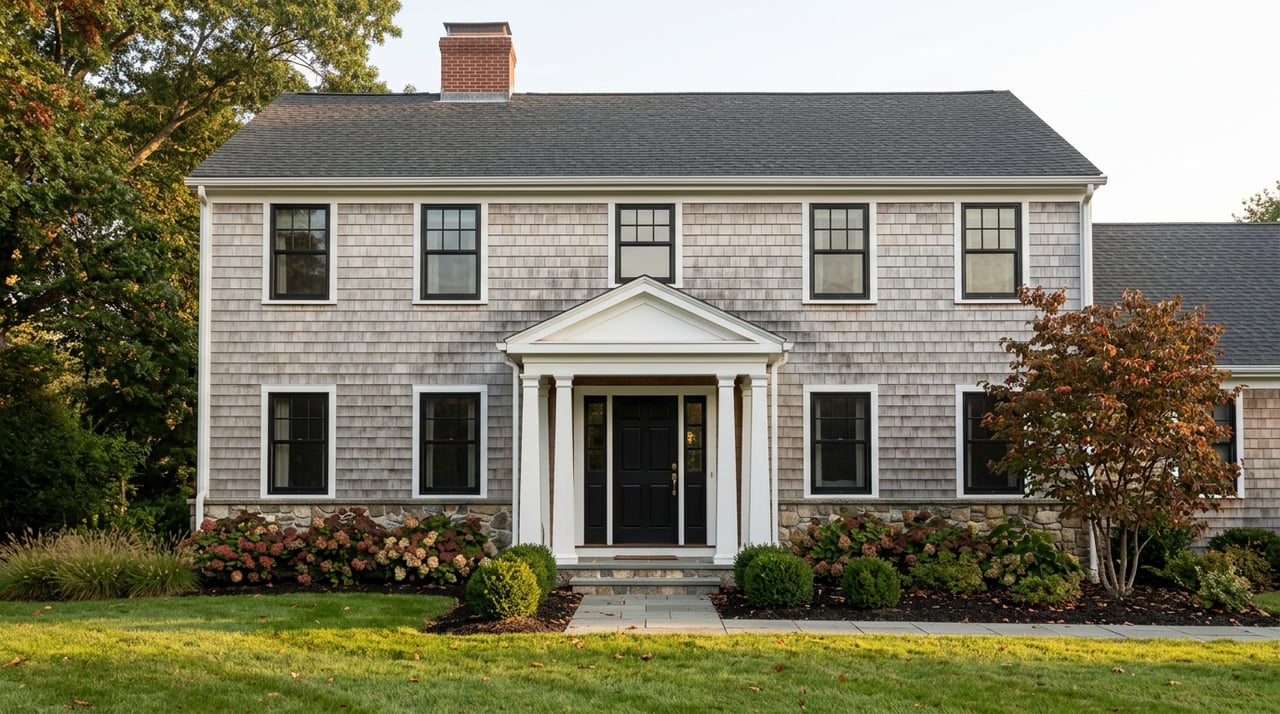
Lexington MA Housing Market 2026: Why Prices Diverge
August 20, 2026
August 20, 2026
Pull up three different sources for Lexington home prices this summer and you will get three different answers, and none of them are wrong.
Redfin's tracking put Lexington's median sale price at $1.7 million in March 2026, up 17.5 percent from a year earlier, with the typical home fielding eight offers and going under contract in about 16 days. Zillow's broader home value index told a calmer story: as of the end of June 2026, the town's overall home value sat at $1,626,351, up a modest 2.3 percent year over year. Then a regional recap of Route 128 corridor towns published in the first week of August 2026 found Lexington's average sale price running below where it stood twelve months prior, even while neighboring Bedford, Westford, and Winchester all posted sale-to-list ratios near 101 percent, almost identical to Lexington's own.
If you are comparing Lexington against a neighboring town right now, that spread is not a data error you can average away. It is the clearest signal in the market, and it traces back to a fight that played out at Town Meeting earlier this year.
Here is the piece that gets lost when a headline reduces a town to one median: agents tracking the spring 2026 figures noted that only about 44 percent of Lexington homes sold above asking price in March 2026, down sharply from roughly 82 percent a year earlier, while the share of listings needing a price cut climbed from about 21 percent to 31 percent over the same stretch. At the same time, inventory stayed tight, with only about 70 homes active at any given point in March 2026 and 4.4 months of supply, still a seller's market by any conventional measure.
Those two facts sitting side by side, tighter inventory and a cooling bidding-war rate, only make sense once you know what kind of home is showing up in each column. Single-family homes are still the backbone of what sells in Lexington, and that segment has not softened in any way that shows up in the data. What has changed is the mix of everything else being counted in the same town-wide averages, because a wave of brand new condo product started closing that simply did not exist in the comparison period a year earlier. The August 2026 regional recap flagged this directly with a small but telling footnote: Lexington's condo market moved at a noticeably slower pace than the year before, though that reading was based on just three sales and should be treated with real caution given the sample size.
Small numbers of very different homes can move a town average without moving the actual competitiveness of the houses most buyers are cross-shopping. That is the first half of the story.
The second half explains where that new condo product came from and why more of it is still on the way, even after residents voted to slow it down.
In spring 2023, Lexington became the first Massachusetts community to comply with the state's MBTA Communities Act, rezoning 227 acres for buildings up to six stories with few restrictions on density. Town officials expected the plan would generate somewhere between 400 and 800 new units over a decade. What actually happened moved much faster than that estimate. As of March 2026, more than 1,600 apartments and condominiums were under construction, approved, or somewhere in the approval process, all in multiunit buildings, a sharp turn for a town that had approved just two multifamily units in the entire prior decade.
Three projects carry most of that volume, and knowing their addresses matters if you are trying to figure out whether a specific Lexington listing sits inside this story or outside it:
Residents living near these sites raised concerns about traffic, school enrollment, and flooding, particularly around 89 Bedford Street, where neighbors testified about repeat basement floods and tight sightlines at the driveways. The unease built into a citizen petition, and in 2025 Town Meeting voted 164 to 9, with five abstentions, to roll the zoning back from 227 acres to roughly 90 acres and tighten the density and height limits that remain. Lexington Center itself, one of the most contested overlay zones, was removed from the plan entirely.
Tina McBride, a Planning Board member who helped lead the rollback, put the sentiment plainly: "there is such a thing as too much growth."
Here is the part that a buyer comparing towns actually needs, because the rollback did not stop the pipeline as cleanly as the vote count suggests.
Ahead of the rollback taking effect, Lexington's Planning Board recorded that 15 property owners had already filed subdivision plans to freeze the prior, more permissive zoning on their land for eight years. That means a specific set of parcels, whichever ones filed before the March 1, 2025 filing deadline, will keep delivering multifamily housing under the old, denser rules regardless of the vote that just capped everything else. The rollback shrank where new filings can happen. It did not undo what was already locked in.
So the honest read on Lexington's supply story has two tracks running at once. Going forward, the town's multifamily footprint is smaller than the original 2023 plan intended. But for the next several years, the parcels that filed early are still going to produce the kind of condo inventory that shows up in blended averages and makes a town-wide median look softer than the single-family market underneath it actually is.
If you are weighing Lexington against Bedford, Winchester, or a similar Route 128 town, the practical question is not "is Lexington's market up or down." It is whether the specific home you are looking at sits inside one of the named overlay corridors, Hartwell Avenue, Bedford Street, or Militia Drive, or outside them entirely.
| Town | July 2026 Sale-to-List Ratio |
|---|---|
| Stoneham | ~107% |
| Acton | ~103% |
| Boxborough | ~103% |
| Bedford | ~101% |
| Lexington | ~101% |
| Westford | ~101% |
| Winchester | ~101% |
That parity in the table above, drawn from July 2026 closed sales in the same regional recap, is the clearest evidence that Lexington's single-family competition has not cooled relative to its peers. A house outside the overlay districts is still trading the same way it would have a year ago, tight inventory, quick timelines, buyers competing for well-priced homes. A condo or new-build inside one of those three corridors is a different product entering the market for the first time, priced against new construction costs rather than against the town's established single-family stock, which is exactly why the cheapest unit at 89 Bedford Street was listed at $1.2 million in spring 2026 coverage even as the surrounding zoning debate was framed around affordability.
If you are looking at an entry-level single-family home, expect it to behave like the tightest version of this market. Sales mix data covering 2024 and continuing into 2026 shows existing single-family homes still make up roughly three-quarters of what closes in Lexington, with new construction and off-market teardowns splitting the rest. The luxury segment above $2.5 million behaves differently again. Roughly half of listings above $3 million sold within the year in 2024, a reminder that pricing precision matters even more at the top of the market than it does closer to the middle.
Does the zoning rollback mean fewer new homes are coming to Lexington? Fewer than the original 2023 plan projected, but not as few as the vote count alone suggests. The 15 property owners who filed to freeze the prior zoning ahead of the March 2025 filing deadline can still build under the old, denser rules for up to eight years on those specific parcels.
Is Lexington's home price actually falling? Not in the segment most buyers are shopping. The softer town-wide averages reflect a small but new pool of condo sales entering the mix, not a change in how competitive single-family listings remain.
Should I wait to buy in Lexington until the new construction pipeline plays out? That depends entirely on what kind of home you're comparing. A single-family house outside the Hartwell Avenue, Bedford Street, and Militia Drive corridors is trading under the same tight conditions it has for the past year. A condo inside one of those corridors is a genuinely different, newer market still working out its own pricing.
If you are trying to figure out which side of that line a specific Lexington listing falls on, or how it stacks up against a house you are also considering in Bedford or Winchester, that is exactly the kind of parcel-level question worth a real conversation rather than another portal search. Jackson Price Real Estate works this market block by block. Let's Connect.
Stay up to date on the latest real estate trends.



Get assistance in determining current property value, crafting a competitive offer, writing and negotiating a contract, and much more. Contact me today so I can guide you through the buying and selling process.