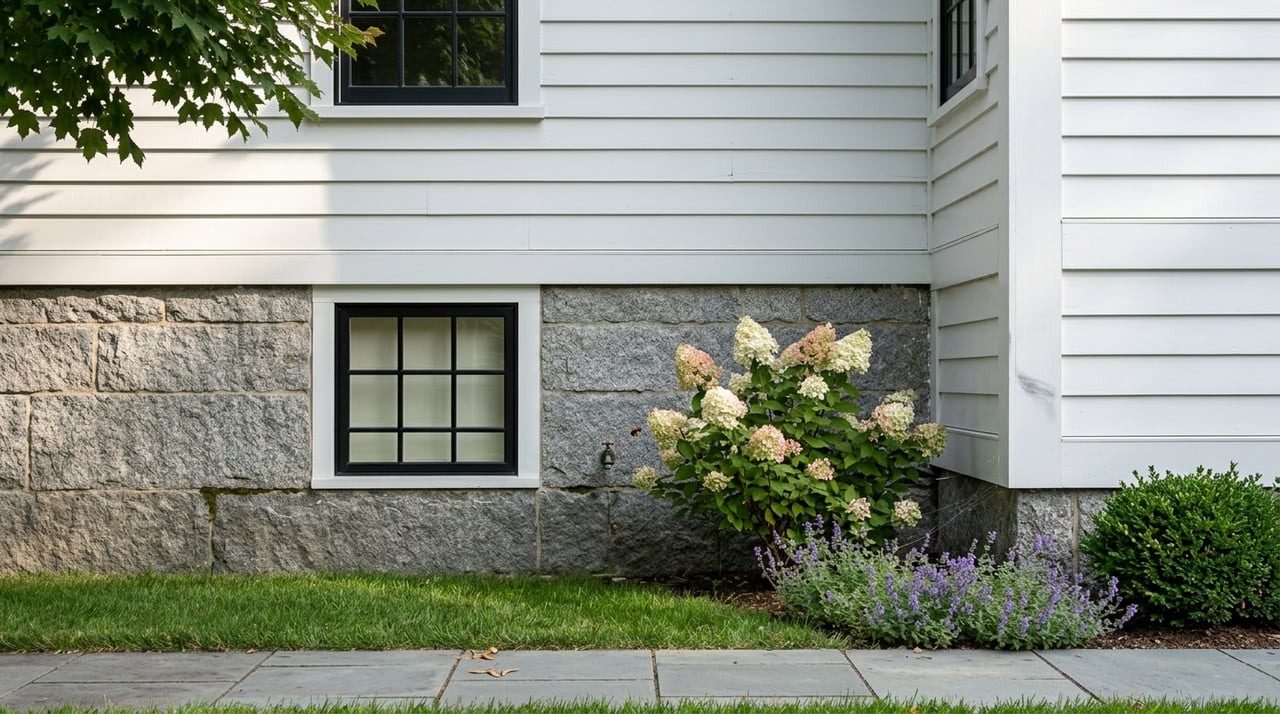
Selling A Home Inside A Concord Historic District: The HDC Timeline Sellers Underestimate
August 6, 2026
August 6, 2026
On February 25, 2026, the Concord Historic Districts Commission spent most of an evening on a single house at 320 Lowell Road in the Barrett Farm district. The owner wanted to modernize a 1700s saltbox with a rebuilt addition. The architect had drawings, a narrative, and structural reasoning ready. The Commission listened, praised parts of the design, then continued the application to the next HDC meeting on March 18, 2026, asking the applicant to come back with a subordinate massing that let the original saltbox stay legible from the road.
That is the friction most sellers in a Concord historic district do not price into their listing timeline. The design guidelines are public. The application forms are online. What is not obvious until you are inside it is that the Commission's calendar, not the seller's, sets the pace of any exterior work you were counting on to hit the spring market.
A Certificate of Appropriateness is not the hard part of selling a Concord historic-district home. The hard part is that the six-month clock on that certificate runs on the Commission's meeting cadence, and a single continuance can push a pre-list improvement out of the window a seller planned around. Buyers who understand that timing quietly reprice their offers on these houses. Sellers who don't, list against a punch list they can't finish.
Concord is unusually early to this game. The Special Act approved by the State Legislature May 2, 1960 established a historic districts commission for the town of Concord, defining its powers and duties and establishing historic districts. There are now six Historic Districts of Concord that contain an extraordinary concentration of nationally significant structures and sites, expanded from the four created in 1960 to include Hubbardville in 1998 and Church Street in 2005.
The rule that matters at closing is narrower than most owners assume. Review applies to exterior features visible from a public way. Interior work is outside the Commission's jurisdiction unless it changes the exterior. In-kind repair and repainting the same color are generally exempt.
| Work an HDC review typically covers | Work generally outside HDC review |
|---|---|
| New construction, additions, changes to massing or rooflines | Interior renovations that don't change the exterior |
| Re-siding, re-roofing with a material change, new windows | In-kind repair with matching material |
| Signs, fences, and site walls visible from the public way | Repainting the same color |
| Demolition (highest scrutiny) | Alterations not visible from a public way |
| Solar arrays, HVAC condensers, and mechanicals visible from the street | Emergency safety work, with later notification |
Two details from the Act reshape a seller's punch list in ways the guidelines don't advertise. First, the Commission's authority extends to the kind, color and texture of building materials and the type and style of all windows, doors, lights, signs and other fixtures designed to be open to view from a public way. Second, the exterior color of any building may be changed to any color or any combination of colors which the commission shall determine from time to time may be used without substantial derogation from the intent and purposes of this act, meaning the pre-approved palette is a real constraint, not a suggestion.
Here is the operative fact almost no pre-listing checklist mentions. No changes shall be made other than those approved by the Commission. If changes to the approved plan are proposed, a new application must be filed. Work must commence within six months from the date of the Certificate unless otherwise agreed upon by the Commission.
Six months sounds generous until you back into it. HDC hearings generally take place on a third-Wednesday cadence. Applications require 1 hard copy of the Application and supporting documentation, the Legal Ad Form, application fee and a flash drive containing all materials and plans, delivered to the Planning Division at 141 Keyes Road. Abutters get notice. If your first hearing turns into a continuance, as the Lowell Road application did, you are already 30 days into the six-month window before you hold a Certificate. Add contractor lead time on custom windows or clapboard specified to historic profile, and a seller aiming for an April list date really needed a Certificate in hand by early fall.
The compounding effect is what buyers exploit. A Concord home listed with a partially finished exterior project reads as approval risk to any buyer's agent who has done this before. The offer adjusts for it.
The Hunt-Hosmer hearing is a useful read because the Commission spelled out its reasoning in a way applicants can plan around. Mr. Clay noted that the MACRIS report identifies the property as the Hunt-Hosmer House, with origins going back to the seventeenth century, and that the western cross-gabled wing is believed to date from the federal period. The commissioners' concern was not the idea of an addition. It was that the proposed enlarged addition would both alter and overwhelm the saltbox form. The proposal made the addition read as the primary structure, diminishing both the original saltbox and the adjoining historic wing.
For a seller, the signal is clear. Additions that read as subordinate to the original mass move faster through review. Additions that reprogram the primary volume trigger continuances. If you are debating between an expanded rear ell that stays lower than the ridge line and a full second-floor lift over an existing wing, the Commission's recent record suggests the ell will close a Certificate in a single hearing and the lift will not.
That framing carries over to demolition. Under Chapter 345, demolition receives the highest level of scrutiny, and even ordinary repair has boundaries. The Act specifically preserves the right to ordinary maintenance and to the erection, construction, reconstruction, alteration or demolition of any such feature which the building inspector shall certify is required by the public safety because of an unsafe or dangerous condition, but that emergency carve-out is not a workaround for a pre-list renovation.
Buyers under agreement on a Concord historic-district home have their own version of the timeline problem, and it shows up in the offer.
Concord's top of market is priced on scarcity of turnkey historic product. Recent third-party market data puts the town's median single-family list price near $2.05 million as of July 2026, with the FY2025 residential tax rate at $13.26 per $1,000 of assessed value. Overall days-on-market data in Concord has run around 38 days across recent snapshots, but a five-town MetroWest sample for the week of June 24 to July 2, 2026 showed twenty-nine single-family homes closed in Acton, Bedford, Concord, Maynard, and Sudbury between June 24 and July 2, 2026, with an average sale price of $1,375,876 against an average list price of $1,333,852, or approximately 104% of the asking price. Turnkey historic homes closer to Concord center compress that further.
A buyer paying at or above list for a house they intend to modify is doing three calculations at once: purchase price, renovation cost, and approval risk. Approval risk is the one most first-time historic-district buyers underweight. A well-advised buyer's agent will lower the offer on a house whose planned changes require massing modifications, and pay closer to ask on a house where the intended work is either interior or clearly in-kind. The market clears at a price that reflects the addition an owner can actually get through review, not the addition the buyer wishes they could build.
Outside the sewer footprint, Concord adds a second approval clock. A Title 5 inspection must occur within 2 years before a sale. If weather conditions prevent inspection at the time of a sale, the inspection must take place within 6 months afterward. The town requires that Title 5 Inspection Reports must be submitted online only through PermitEyes and the inspector listed on the report must be permitted in the Town of Concord for the report to be accepted.
For a historic-district property on septic, the practical sequence is that the Title 5 report needs to be current at closing, and any exterior fix flagged by an HDC-triggered project has to survive its own timeline. Those two clocks rarely stack neatly. Sellers who start both processes at the same time close cleaner than sellers who serialize them.
There is a bifurcation in Concord that deserves stating out loud. Aggregated last-30-day figures pulled from local MLS feeds this summer showed a sold median around $1.35 million against a new-listing median above $2.1 million. That is not a market that is falling. It is a market where the closed sales lag the new-list sales in price because the new inventory is heavier on premium historic and estate product that takes longer to trade.
Inside the historic districts, the operative variable is not price per square foot. It is whether the house presents as done. A home whose exterior reads as HDC-clean at listing sells fast at or above ask. A home whose visible exterior project is half-approved, half-finished, or dependent on a Certificate that has already had one continuance sells for what the buyer is willing to price into their own approval risk.
Does HDC approval transfer to a new owner? The Certificate attaches to the approved work, not the applicant. If the seller has an active Certificate and the six-month commencement window is still open, a buyer can generally proceed with the approved scope. Any change to the approved plan requires a new application.
Are solar panels and heat pumps reviewable? If the equipment is visible from a public way, yes. Siting mechanicals out of view or behind screening is the standard path.
What about work that is genuinely emergency in nature? The Act preserves the ability to do work the building inspector certifies is required for public safety, with later notification and retroactive review as the Commission directs.
Where do appeals go? Chapter 40C outlines the appeal procedure and timelines for local historic district decisions in Massachusetts.
The owners who close cleanly in a Concord historic district treat HDC review the way a good listing agent treats an inspection response: as a scheduled input, not a surprise. Confirm district status through the town assessor. Book a pre-application check-in with staff before contracting for materials. Design toward subordinate massing when the choice is available. Start Title 5 in parallel if the property is on septic. Build the six-month commencement window into your renovation contract, not around it.
If you own a house in Barrett Farm, Main Street, American Mile, Monument Square, Hubbardville, or Church Street and you are thinking about listing in the next twelve months, the sequencing decisions you make this month matter more than the staging decisions you make next spring. Jackson Price Real Estate works with Concord sellers on that sequencing, and on the buy side with clients making offers on historic-district homes they intend to keep evolving. Let's Connect.
Stay up to date on the latest real estate trends.
Get assistance in determining current property value, crafting a competitive offer, writing and negotiating a contract, and much more. Contact me today so I can guide you through the buying and selling process.